Externally-led Patient-Focused Drug Development Meeting for SCN2A-Related Disorders

Posted authors: Katie Friedman, BS, and Morgan Weberg, BS
Dear SCN2A Community,
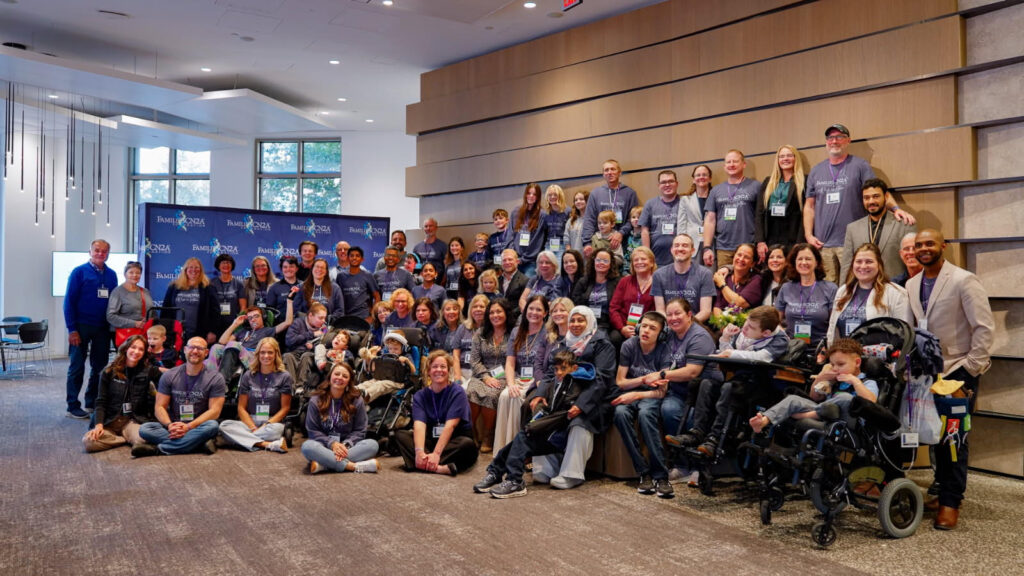
Our community, including staff, volunteers, and parent and family advocates, recently returned from a busy October weekend in Washington, D.C. The Externally-Led Patient-Focused Drug Development (EL-PFDD) meeting took place on Friday, October 23, 2026. The FamilieSCN2A Foundation organized this town-hall style meeting as a platform for families to share their lived experiences with SCN2A-related disorders (SRDs) to inform the United States Food and Drug Administration (FDA) and key stakeholders, including drug developers, industry representatives, clinicians, and researchers. Post-meeting activities included SCN2A Warrior Trick-or-Treating and the Warrior Challenge Team Celebration at the Smithsonian National Zoo.
Meeting Objectives
The primary goal of the EL-PFDD meeting was to share the critical patient and caregiver voice, in alignment with the FDA’s commitment to include advocacy and patient voice in all aspects of the drug development process. SRDs are medically complex and heterogeneous, requiring that a variety of lived experiences be represented comprehensively. The target patient population for this meeting focused on developmental and epileptic encephalopathy (DEE), autism spectrum disorder (ASD), and intellectual disability (ID) presentations of an SRD, as these are most common and affect a majority of diagnosed individuals. The meeting presented three important topics: 1) Health Effects and Daily Impacts, 2) Current Approaches to Treatment, and 3) Patient Perspectives on Clinical Trials. Each topic began with family and patient stories, thoughtfully planned to include a range of perspectives. This was followed by moderator polling and a large-group discussion open to both in-person and online attendees.
Meeting Highlights
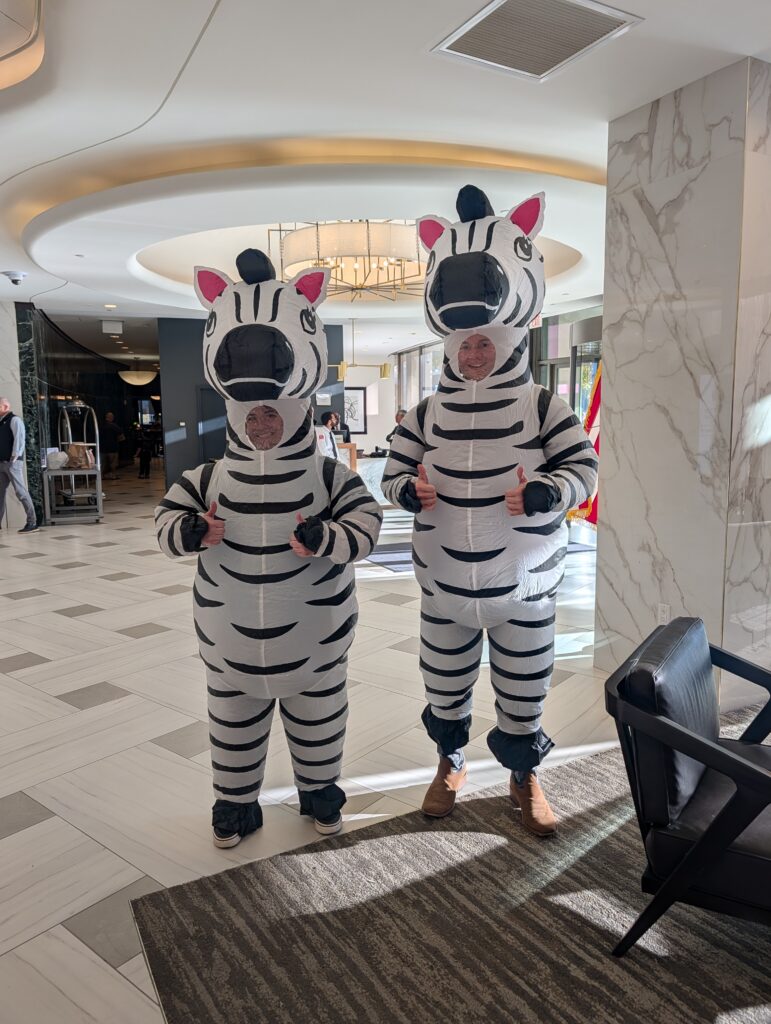
Setting the energy early Friday morning, volunteers William Crumlett and Maddy O’Brien showed their support for rare disease families by wearing inflatable zebra suits, welcoming everyone into the AGU Conference Center. At their tables, attendees were greeted with stones with the word “Joy” in honor of Charlotte and bubbles in memory of Emily Katherine (“Em”). The room buzzed with chatter, sensory toys, and vocalizations; all noises were welcome here, no matter the interruption. With 111 participants watching online and 125 in person, Foundation Executive Director, Founder, and Ben’s Mom, Leah Myers kicked off the meeting:
“Improvement means something different to everyone in this room. Today we get to explain this.”
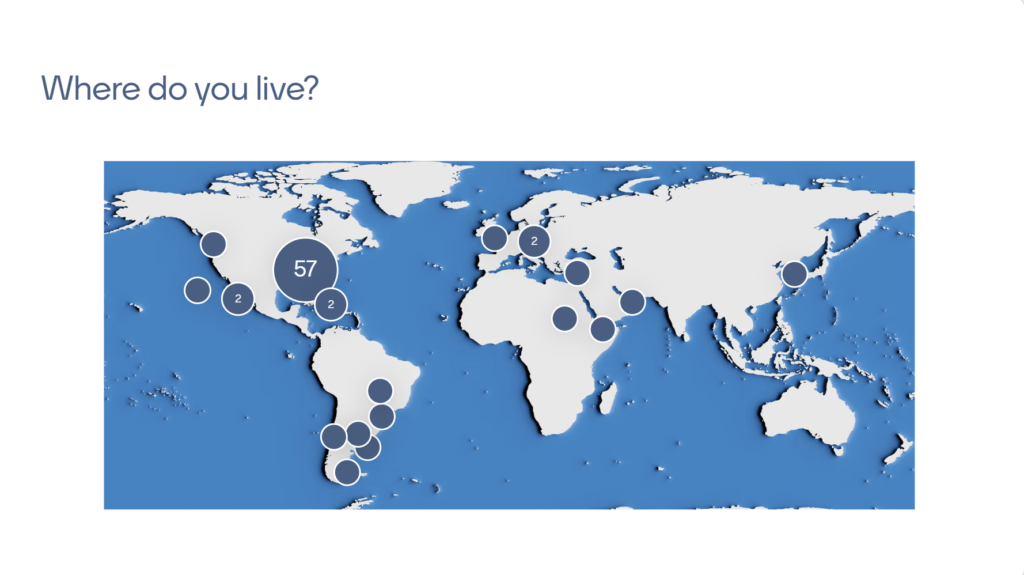
Michelle Campbell, FDA Associate Director of Stakeholder Engagement and Clinical Outcomes, continued with remarks from the FDA, followed by a clinical overview of SRDs from Children’s Hospital of Philadelphia pediatric neurologist, Dr. Laura McGarry, and comments from moderators, Dr. Kevin Bender and Dr. Christina Sanlnocencio. Demographic polls showed SCN2A warriors, family members, drug developer professionals, industry colleagues, and FDA representatives participating from around the world, in North America, South America, Europe, Africa, and more. Parent and family advocates represented SCN2A warriors ranging from 0-30 years old, diagnosed with Loss-of-Function (LoF), Gain-of-Function (GoF), Mixed Function (MF), and undetermined genetic variants, in decreasing order of prevalence.
Below are some highlights from the featured family stories. Videos of the testimony will be made available here, and a more complete description will be compiled in the Voice of the Patient Report.
Topic 1: Health Effects and Daily Impacts
- Angie and Jillian, mother and 15-year-old sister of Mark, an SCN2A warrior who has a contagious laugh and picks out songs for people that are special to him—for his sister, “Sweet But Psycho”. Mark has struggled with epilepsy, hypotonia, ID, language impairment, osteoporosis, pica, gastrointestinal (GI) symptoms, cortical visual impairment (CVI), sleep disturbance, and a very high pain tolerance. “There’s a teenage boy under the suffering layers that just wants to tease his sister. I know there are words inside of him trying to get out. Until then, his language is music.”
- Taylor and Frank, parents of Isaiah, an SCN2A warrior who communicates with an eye-gaze augmentative and alternative communication (AAC) device and has epilepsy, sometimes requiring hours of recovery and hospital visits. Taylor and Frank wish for better treatment for Isaiah’s seizures, so that he can have more opportunities to learn, communicate, and experience joy in the world around him.
- Brian, father of Isla, an SCN2A warrior who loves playing with water and communicates through music. Isla is minimally verbal and has ASD, ID, and severe self-injurious behavior (SIB) and GI issues. Brian wishes for better treatment for Isla’s SIB that does not cause sedation, impacting her ability to live her life.
- Lindsay and Dan, parents of Miles, an SCN2A warrior who loves to be held by his parents. Miles is nonverbal and nonambulatory and struggles with severe neuroirritability, SIB, epilepsy, CVI, and GI symptoms. Lindsay and Dan wonder what will happen when they can no longer carry Miles, and they wish for him to feel more content.
- Tracy, mother of Charlotte, an SCN2A warrior, loved the color red, sparkles, and the song, “You Are My Sunshine”. Charlotte began having seizures in utero, which continued throughout most of her life, until she passed away in 2016. “The end of her life has to be the beginning of something new and effective for others.”
- Super Siblings Cora, Jillian, Juliet, Marley, Susan, Sean, and Judah talked about their special bonds, protective instincts, and abilities to understand their warrior brothers and sisters, especially through music.
- From Jillian, “When Mark was born, I immediately felt a need to protect him, to take care of him, to be his voice. I was born with the ability to understand him.”
- From Judah, “I love my brother and don’t want to change him. We love geo-caching and dancing together.”
- Self Advocate: Carson likes ramen noodles, T-bone steaks, and beer; dislikes helping parents with chores. Carson was non-verbal for his entire childhood and found his voice just days after starting a clinical trial for an experimental treatment.
Topic 2: Current Approaches to Treatment
- Brian, father of Logan, aka “Mischievous Mike,” an SCN2A warrior, who loves Disney movies, bike rides, swimming, snuggling with his mom, holding hands with his sister, and unravelling toilet paper. Logan’s condition worsened when his seizures were treated with a sodium channel blocker, due to this being a dangerous and inappropriate treatment for LoF. “We want to hear our son’s voice. We want him to tell us what he wants and when he is in pain, scared, or happy. I know he has something to say.”
- Krista, mother of Leo, an SCN2A warrior, who developed infantile spasms at 17 months old. Leo has tried many different seizure treatments, some of which helped temporarily while others caused sedation, damaged vision, and reduced bone density, leading to fractures. Krista says that if Leo could target a word on an AAC, it would make a huge difference.
- Sandhya and Prasanna, parents of Sophia, an SCN2A warrior, whose seizures worsened with puberty despite medication, causing her to lose many hard-earned skills. Sophia’s parents wish for her to have a better quality of life, to be able to do the activities that other kids do, and for her to be able to communicate if she is hurt. “We are always guessing. Our guesses might be wrong, but it’s the best we can do.”
- Jaclyn, mother of Emily, an SCN2A warrior, whose longest stretch of life without seizures was 9 days. Emily tried many seizure treatments, most of which brought side effects and “dimmed everything,” until she passed away this year, at 8 years old. She wishes for treatments that will give families more time. “No other parent should have to endure this heartbreak.”
Topic 3: Patient Perspectives on Clinical Trials
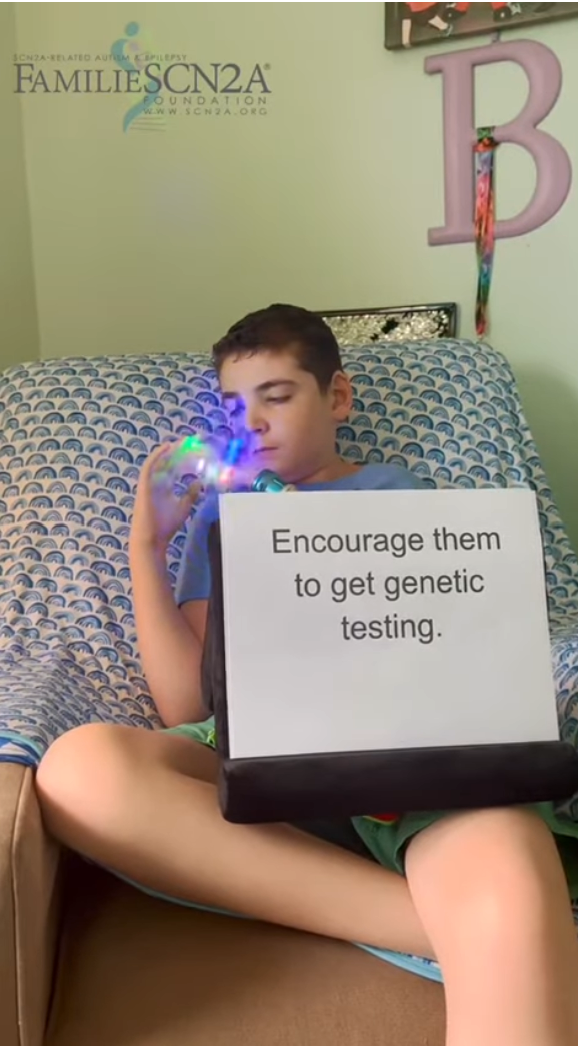
- Alejandra, mother of Tomas, an SCN2A warrior, discussed the importance of understanding your child’s genetic variant type for clinical trial eligibility. She also discussed barriers to participating in clinical trials, including language, health literacy, location, and travel, especially for those living outside of the United States. “I need to be able to understand the study perfectly, so that I can weigh the risks and benefits.”
- Mery, mother of Ethan, an SCN2A warrior, experienced a life-threatening status epilepticus episode while enrolled in a clinical trial. Mery discussed the importance of clear emergency protocols, unblinding, and support from study teams leading clinical trials. She wishes for more good days than bad ones for Ethan.
- SCN2A self-advocate Carson, an SCN2A warrior, and his mother Renee shared that Carson’s only day of life without seizure medication was the day he was born. He is now 23 years old and is his own guardian with a Supported Decision-Making Agreement, and he signs clinical trial consents himself. Renee spoke about their positive experience with an investigational drug and the importance of open-label extensions and expanded access in clinical trials.
SNORKEL Summary
Dr. Christina Snlnocencio’s SCN2A Narratives, Outcomes, Research, Knowledge and Lived Experience (SNORKLE) Study is designed to inform Patient-Focused Drug Development efforts, aiming to learn what is most important to families for future treatments. Preliminary analyses showed that top concerns included communication, seizures, sleep, behavior and regulation, safety, motor, GI, and day-to-day variability. Areas of measured improvement should include ability to indicate pain, ability to indicate wants and needs, day-to-day functioning, self-care, maintenance of skills, alertness, learning, using hands purposefully, joy, inclusion, participation, elopement, self-injurious behavior, mood, sibling and caregiver support, and future planning. This established the development of a Concept Disease Model (CDM) draft for SCN2A-Related Disorders, combining data from the DRAGONFLY Study, the FamilieSCN2A Global Patient Registry for SRDs, and SNORKLE. Additional analyses will contribute to the CDM and lead to a published manuscript.
Conclusion, Next Steps, & How to Get Involved
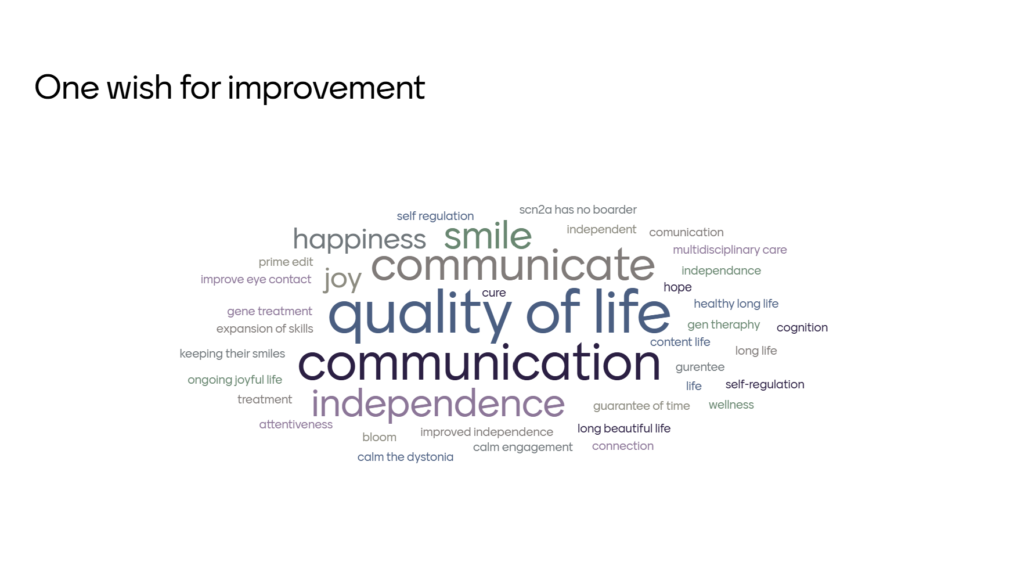
The EL-PFDD meeting concluded with a final poll that asked meeting attendees to respond to, “One More Wish of Improvement.” A sentiment that concluded this important day while shedding light on important work still to accomplish for the chance for every wish to come true. Quality of Life, Communication, and Independence were most commonly shared, echoing the discussions throughout the meeting. The FamilieSCN2A Foundation will begin to compile information shared at the EL-PFDD into the Voice of the Patient Report that will be submitted to the FDA in a year. The report will consist of all in-person and online comments, responses, and discussions, including those that were not presented in real-time. This report will serve as a historical data reference for SCN2A-Related Disorders at the FDA for the future. If you would like to further contribute to the Voice of the Patient report, the Open Comments period is ongoing until November 22, 2026. Please access the link to respond here. The foundation is actively discussing next steps with FDA representatives regarding endpoints for clinical trials and will ensure prompt communication with the community of any official updates.
The FamilieSCN2A Foundation is committed to advancing drug development efforts with a key focus on the patient voice. To learn more about these efforts, please visit the Patient-Focused Drug Development page and the EL-PFDD page on our website. The FamilieSCN2A Foundation would like to extend sincere gratitude to Melody Kisor for leading this meeting and for her vision to see it come to fruition. We would like to thank our sponsors, global network of SCN2A patient advocacy groups, accessibility partners, our meeting moderators, volunteers, Clinical Picture Maker partners, and the AGU staff for event hosting and coordination. To our families, parent advocates, and super siblings, this meeting would not be what it was without your willingness to participate, courage to share your stories, and unwavering dedication to spread awareness and advocate for your loved ones living with an SCN2A-Related Disorder. Every word spoken and shared, whether in real-time or online, was incredibly impactful. Thank you for being part of this powerful community.
With gratitude,
The FamilieSCN2A Foundation Team