Reflections from AES: Collaboration, Momentum, and What’s Ahead for SCN2A

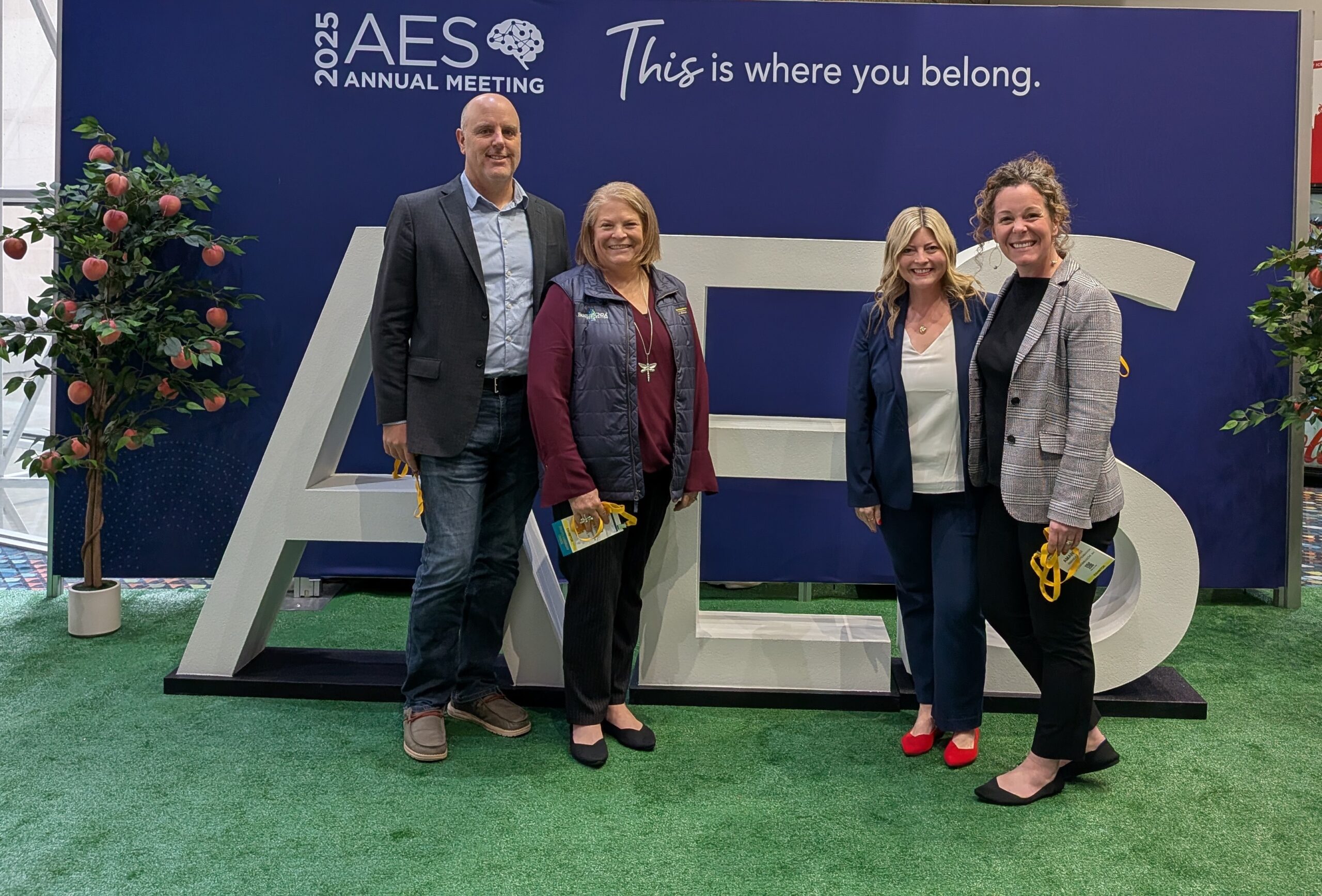
Photo: Jeff Cottrell – Interim Chief Scientific Officer, Leah Myers – Executive Director, Angie Weaver – Director of Philanthropy & Development, Amanda Gale – Program Manager. Missing from photo: Jenny Burke, Board Chair
Our team returned from the American Epilepsy Society (AES) Annual Meeting feeling encouraged by the depth of collaboration across the epilepsy community and energized by the progress being made in research, advocacy, and treatment development. From scientific breakthroughs to policy conversations and meaningful relationship-building, AES once again underscored how much forward movement happens when advocates, clinicians, researchers, and industry come together.
ChannelopathySCIENCE 2025: Setting the Stage for AES
On the Friday before AES, Leah Myers and Jeff Cottrell attended the Channelopathy Science 2025 meeting at Georgia Tech in Atlanta. Organized by Medical & Scientific Advisory Board member Dr. Al George, the meeting brought together speakers from universities, biotechnology companies, and patient advocacy organizations, creating a focused and collaborative environment that set the tone for the days ahead.
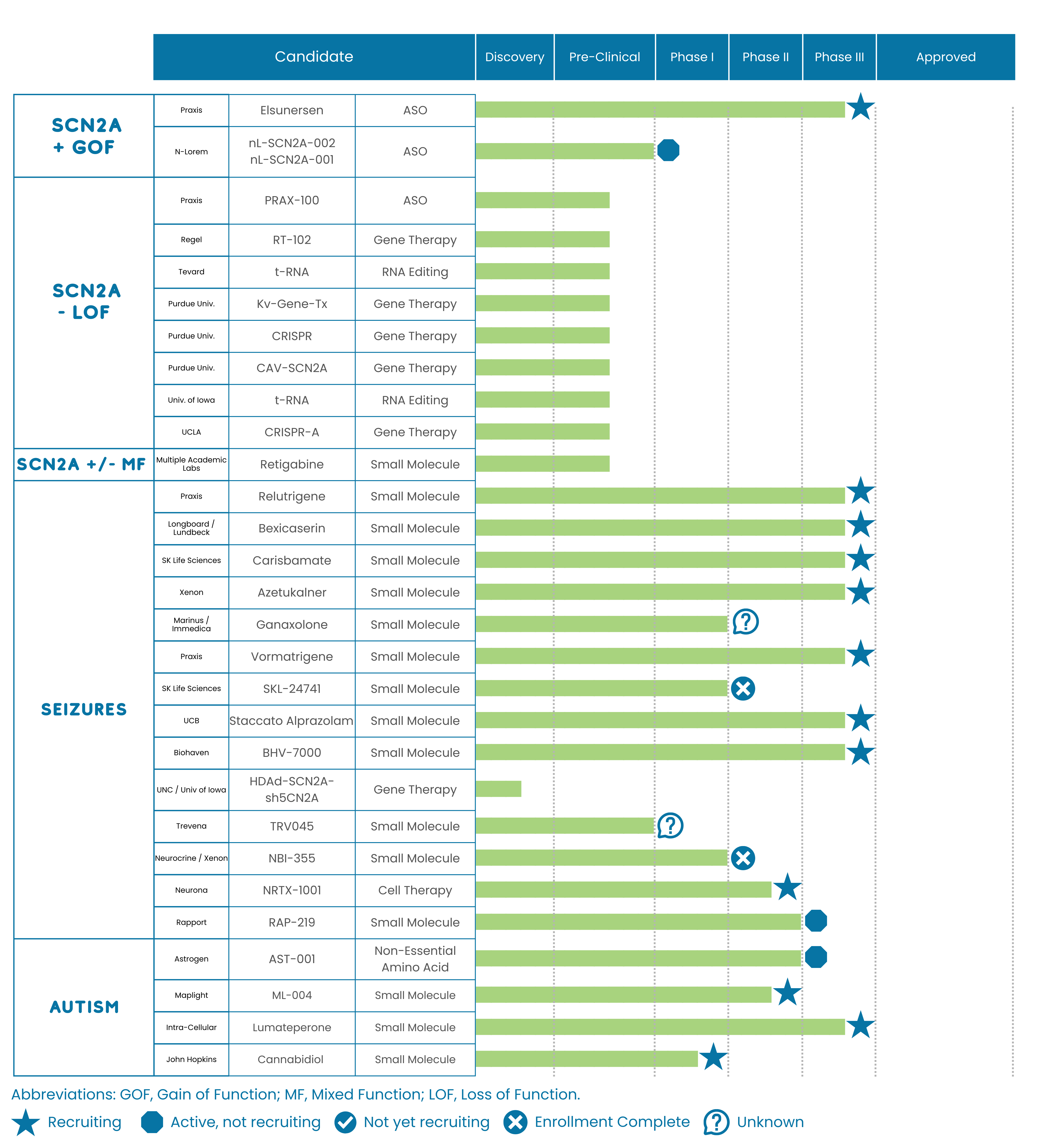
Several presentations were particularly meaningful for the SCN2A community. Dr. Morgan Robinson, a postdoctoral researcher in Dr. Yang Yang’s lab at Purdue and a 2025 recipient of an Action Potential Research Award, shared his work developing human mini-brain organoid models using SCN2A loss-of-function cell lines. His research focuses on using gene-editing approaches to restore normal neuronal activity, offering an important human-relevant platform for understanding disease mechanisms and testing future therapies.
Dr. Perry Spratt, formerly of the Bender lab at UCSF and now a scientist at Regel Therapeutics, presented recent work demonstrating that CRISPR activation can rescue neuronal function and improve animal behavior in a mouse model of SCN2A loss-of-function — an encouraging step toward therapeutic strategies that increase gene expression.
We also heard from Dr. Kris Khalig of Praxis Precision Medicines, who discussed recent clinical results from their small-molecule sodium-channel inhibitor and its potential relevance across sodium-channel–related disorders. His presentation highlighted new methods for predicting how specific variants affect channel function — a key advance for precision medicine.
Manoj Patel of the University of Virginia shared exciting work demonstrating the use of CRISPR editing to repair SCN8A variants and restore phenotypes in mouse models. We were encouraged to hear that these efforts are now expanding to include SCN2A, with plans underway to translate this work beyond the lab.
The meeting concluded with brief introductions from multiple patient advocacy organizations. We were proud to have Leah represent the FamilieSCN2A Foundation, sharing an overview of our community, research priorities, and commitment to partnership and collaboration — a theme that carried directly into AES.
Advocacy and Policy: Staying Engaged at the National Level
At the Epilepsy Leadership Council (ELC) Luncheon, we received important updates on federal advocacy efforts shaping the future of epilepsy care and research. Conversations included progress on the National Plan for Epilepsy and legislation critical to our community, such as H.R. 6280 – the Access to Genetic Counselor Services Act of 2025, which would expand access to genetic counseling for families navigating complex diagnoses like SCN2A-related disorders. These policy efforts are a reminder that progress doesn’t only happen in the lab — it also happens through sustained advocacy.
For the past four years, our ED, Leah Myers, has had the honor of serving on the Epilepsy Benchmarks Steering Committee, one of only four patient advocates selected to participate alongside scientific and clinical leaders. This committee is responsible for shaping the agenda for the Curing the Epilepsies meeting to be held at NINDS next year. This year, our work focused on the co-occurring conditions associated with epilepsy, intentionally moving away from the term “comorbidities.” Our Board Chair, Jenny Burke gave the patient/family perspective on how co-occurring conditions can affect quality of life and cannot be ignored. We felt it was critical to recognize that epilepsy is often a symptom of an underlying disease and that individuals experience overlapping, interconnected conditions that cannot be addressed in isolation. This reframing helps ensure national research priorities better reflect the full lived experience of people with epilepsy and their families.
Conversations on the Exhibit Hall Floor
Our exhibit booth stayed busy throughout the meeting, keeping our team on our toes with thoughtful questions and meaningful conversations. We connected with clinicians caring for individuals with SCN2A-related disorders across the lifespan — including many navigating the transition from pediatric to adult care, an area where resources and coordinated support remain especially limited. We also spoke with scientists, biotech investment advisors, and representatives from device companies interested in learning more about SCN2A and engaging with the community.
We were encouraged by the number of international providers who stopped by to connect and learn more about the global reach of the FamilieSCN2A Foundation. Together, these conversations reinforced both the growing awareness of SCN2A and the continued need for collaboration among providers, researchers, and families worldwide.
Being in person at AES matters. Relationships are built through real conversations, shared moments, and the trust that develops face to face. Informal discussions between sessions, chance meetings in hallways, and time spent together create space for deeper connection, clearer understanding, and more meaningful collaboration. These in-person interactions strengthen partnerships in ways that emails and virtual meetings simply can’t, helping the Foundation build lasting relationships that move the work forward for families.
Celebrating Research and Early-Career Scientists
While we did not have a current grantee this year, attending the AES Grantee Reception reinforced how important early-career funding is for advancing epilepsy research. FamilieSCN2A remains deeply committed to partnering with AES on early career grants and celebrating the scientists whose work will shape the future of care.
Community, Connection, and Shared Impact
Several receptions highlighted the power of collaboration across the epilepsy ecosystem. The DEE-P Connections and The Inchstone Project Celebration of Impact brought together families, clinicians, researchers, advocates, and industry leaders to reflect on collective progress. SCN2A families were among the first to help launch The Inchstone Project five years ago, and it was meaningful to see how far the field has come since those early days.
We also spent time connecting with partners including Regel Therapeutics, UCB, Lundbeck, Neurocrine Biosciences, Xenon Pharmaceuticals, and members of the REN+DEE-P Connections. While some of these groups have SCN2A-specific programs in their pipelines, many are increasingly moving toward DEE basket trial approaches. These in-person conversations were valuable for strengthening relationships, aligning on evolving development strategies, and continuing discussions about therapies in development and opportunities for future collaboration.
Posters, Posters, and More Posters
The poster hall was especially rich this year, with so many presentations relevant to the SCN2A community that our team had to divide and conquer. Topics spanned SCN2A, Dravet syndrome, Lennox-Gastaut syndrome, DEEs, autism, quality of life, biomarkers, and clinical endpoints. We made a point to speak directly with presenters — learning from their work, asking questions, and identifying opportunities to collaborate and share resources.
AES continues to be a powerful reminder that progress in rare epilepsies is built through partnership. As Dr. Anne Berg, an esteemed epidemiologist, emphasized during the Presidential Symposium, “Early seizure control is of key importance—don’t wait for metastasis.” That message reflects one of our core values: urgency. Timing matters, and waiting comes at a cost for children and families living with severe epilepsies. We are deeply grateful to the scientists pushing boundaries, the clinicians caring for families every day, the advocates shaping policy, and the families whose lived experience drives this work forward. Together, these connections move us closer to better care—and better futures—for individuals with SCN2A-related disorders.
Post authored by: Amanda Gale – Program Manager. Jeff Cottrell – Interim Chief Scientific Officer, Jenny Burke, Board Chair, and Leah Myers – Executive Director