
Authored by: Elizabeth L. Lyon, MS, CGC, LGC
Contributions by: Leah Schust Myers, Melody Kisor, Amanda Gale, Katelin Scott, Jenny Burke
Call to action – Share Your Stories!
On Genetic Testing Action Day (7/25), we encourage families to share your stories.
Parents of children with special needs have remarkably rich and diverse networks. Raising awareness for other parents through social media and through advocacy groups might help encourage parents to initiate discussions with their providers. Sharing your story can spark powerful questions in another parent’s mind.
- “Could this be genetic?”
- “Maybe testing is easier than I previously thought?”
- “Could a genetic test result give us the diagnosis we need to help understand and better treat my child’s condition?”
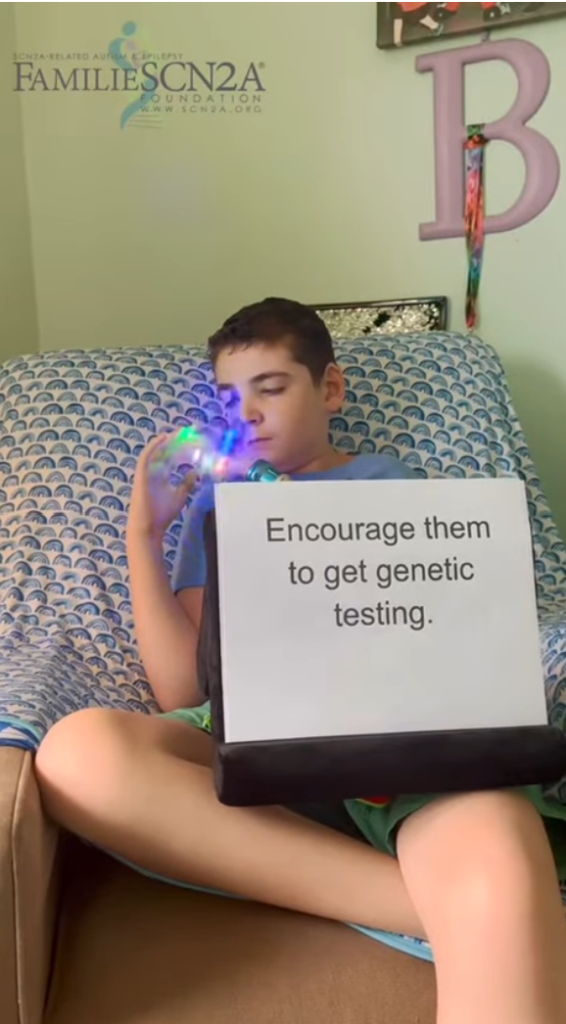
Powerful social media posts like “Ben’s Story” can help spread awareness and spark action.
Another National Day?
July 25th is National Genetic Testing Action Day (NGTAD). You might be asking why would the nation specifically need a Genetic Testing Action Day? Doesn’t everyone, especially providers, know how important and valuable genetic testing is after all of the incredible advancements in the last few decades? We already have lots of awareness and action days such as DNA Day on April 25, Genetic Counseling Day on November 4, Rare Disease Day on February 28, and of course February 24th is SCN2A Awareness Day. We also have entire months of awareness: February is Rare Disease Awareness Month, April is National Autism Acceptance Month, and November is Epilepsy Awareness Month. NGTA day is equally as important because it emphasizes the value of genetic testing for the advancement of treatments and care.
What is NGTA Day?
In 2025, July 25th was chosen for NGTA day to honor Rosalind Franklin, whose transformative work contributed to discovering the structure of DNA. The National Genetic Testing Action Day seeks to increase awareness about how genetic testing in patients with epilepsy, congenital anomalies, developmental disabilities, rare diseases, inherited cancers and other conditions assists with finding diagnostic, treatment, therapy, and clinical research information in addition to other supportive resources. With SCN2A being the leading monogenic cause of autism, and one of the top genetic causes of epilepsy, it makes sense that a genetic testing action day would be very meaningful to the community.
Data Supports the Need for National Genetic Testing Action Day
Since Rosalind Franklin’s days, advancements in our understanding of genetics, genetic-related conditions, and genetic testing have been enormous. Additionally, testing recommendations for providers and patients have been developed and routinely updated over the years to reflect this. However, only 17% of children with autism and 26% of children with both autism and intellectual disability received genetic testing according to a 2025 Medicaid study. The researchers identified a critical gap: physicians are not offering genetic testing at the rate recommended by current standards of care. The genetic testing disparity is made apparent by the findings of another 2025 study which evaluated 7,539 electronic health records for the diagnosis of autism or other neurodevelopmental disorders (Arcebido et al., 2025), where researchers found that only 30.57% of cohort patients with various types of insurance underwent at least one recommended genetic test. Key publications on SCN2A consistently report that SCN2A-related disorders are severely underdiagnosed.
Genetic testing recommendations may vary slightly depending on the particular condition. Both pre-and post-test counseling about the potential benefits and limitations of testing are critically important to the testing process. For neurodevelopmental disorders such as epilepsy, autism, global developmental delay, and/or intellectual disability, the table below provides the most commonly followed recommendations:
What are the Guidelines for Genetic Testing Recommendations?
| Condition | Guideline Title | Organization | Tier 1 Recommendation |
| Unexplained epilepsy | Genetic Testing and Counseling for the Unexplained Epilepsies: An Evidence-Based Practice Guideline | National Society of Genetic Counselors (NSGC) | Offer ES/GS (preferred) or MGP ≥25 genes with CNV analysis regardless of age |
| Epilepsy | Current Practice in Diagnostic Genetic Testing of the Epilepsies (ILAE Genetics Commission Update) | International League Against Epilepsy (ILAE), Genetics Commission | Offer ES/GS, if not available, then offer MGP. CMA for structural variants, especially when DD/ID or dysmorphic features are present. |
| Global Developmental Delay (GDD) / Intellectual Disability (ID) | Genetic Evaluation of the Child With Intellectual Disability or Global Developmental Delay (Clinical Report) | American Academy of Pediatrics (AAP), Council on Genetics | Offer ES/GS and CMA; Tier 2: Fragile X and metabolic tests. |
| Intellectual Disability / Autism Spectrum Disorder / Multiple Congenital Anomalies / Neurodevelopmental Disorders | Exome and genome sequencing for pediatric patients with congenital anomalies or intellectual disability: an evidence-based clinical guideline of the American College of Medical Genetics and Genomics (ACMG) | American College of Medical Genetics and Genomics (ACMG) | Offer ES/GS to patients with 1 or more congenital anomalies prior to age 1, or who have DD/ID with onset prior to 18 years of age. CMA is typically a second tier test after negative results for ES/GS. |
Abbreviations: ES/GS: exome sequencing or genome sequencing, MGP: multigene panel, CNV: copy number variant; CMA: chromosomal microarray analysis, ID: intellectual disability, GDD: global developmental delay(s), DD/ID: developmental delay(s) and/or intellectual disability
What are the Benefits and Risks of Genetic Testing?
A positive genetic test by either exome or genome sequencing (ES/GS) can assist families and their healthcare providers with obtaining a diagnostic reason for the child’s condition. With this information, together they can make informed medical decisions about appropriate medications, avoid additional invasive tests or procedures, and learn about qualifying clinical trials. Recurrence risk counseling for the parents, patient and other at-risk family members also becomes possible.
“Genetic testing does more than provide a diagnosis—it opens the door to a community. For families affected by a rare genetic condition, identifying the underlying gene can connect them with others who share similar experiences, as well as patient advocacy organizations that provide education, support, resources, and opportunities to participate in research. Finding your community helps families realize they are not alone and empowers them with the knowledge, connections, and hope needed to navigate the journey ahead.”
Leah Schust Myers, Parent and Executive Director of the FamilieSCN2A Foundation
It can be frustrating to receive negative results, but a negative ES/GS test result is valuable in that a large proportion of single gene causes can be ruled out in a single test. A negative ES/GS result reduces – but does not entirely remove – the need for sequential, piecemeal genetic testing. Depending on symptoms, more targeted genetic testing may be warranted.
There are some potential risks to genetic testing that can be explained by a trained professional. Working closely with a genetic counselor can help families make an informed decision about the risks and benefits of genetic testing.
Choosing to test or not test is a very personal decision, and may not be right for every family.
Where can I find Genetic Testing?
In the United States, there are about 18 commercial and academic laboratories that test for SCN2A and other genes related to neurodevelopmental disorders. All laboratories should be CLIA certified, CAP accredited, and state licensed where applicable. We have created a spreadsheet of genetic testing companies on the Clinician Information for Professionals webpage. Note: your healthcare provider will need to order genetic tests. Direct-to-consumer testing is not clinically validated to the same standard as clinical-grade genetic testing and may lead to false positives.
SCN2A testing can be a solo gene test, as part of a panel of genes, or whole genome or whole exome sequencing. Samples may include a buccal (cheek) swab, saliva, or blood.
Some research studies also include genetic testing. Examples include:
- SPARK (Simons Foundation Powering Autism Research for Knowledge) is the largest ongoing research cohort study of autism spectrum disorder (ASD) in the US. It was launched in December 2015 with the goal of enrolling 50,000+ families to accelerate autism research. Participants, who are professionally diagnosed with ASD, provide saliva-based DNA samples for exome sequencing and microarray genetic tests at no charge. A distinctive feature of SPARK is its program for returning clinically actionable genetic results to participants. For more information, go to SPARKForAutism.org.
- Probably Genetic offers free testing programs to qualifying patients. Check out their website for a variety of informative blogs on topics such as understanding the difference between insurance-billed and no-cost genetic testing, determining if insurance covers a genetic test, test price transparency, and parent stories.
We’ve already had Genetic Testing- What Else Can We Do?
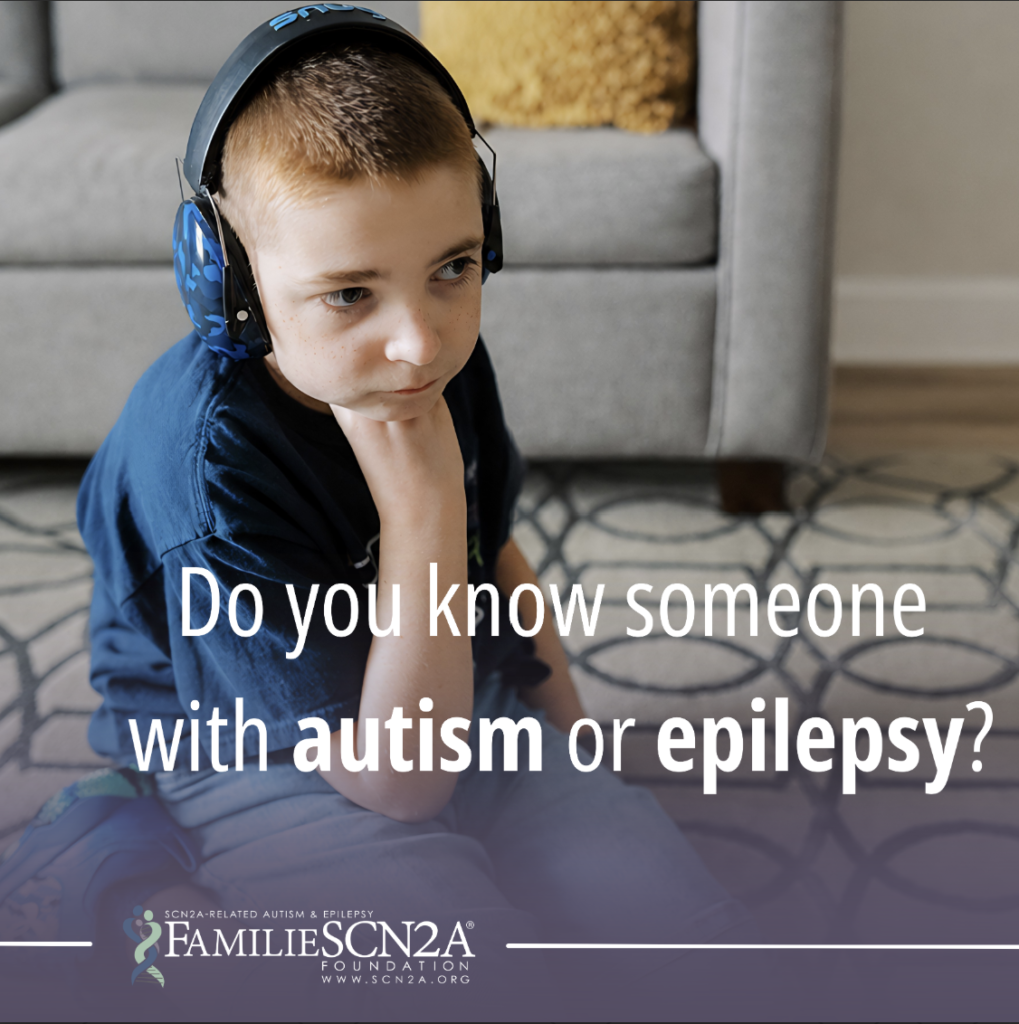
Perhaps during your own child’s diagnostic odyssey, when genetic testing identified a SCN2A variant, you felt better equipped to obtain the most targeted treatments and therapies. Parents commonly report a sense of relief and empowerment when genetic testing identifies the causative gene of their child’s autism, epilepsy, developmental delays, and/or intellectual disability.
“Genetic testing gave our family a place to begin. Henry’s SCN2A diagnosis connected us to a community, helped inform his care, and brought clarity to so many of the questions we had been carrying. As both a parent and the Director of Programs and Operations at the FamilieSCN2A Foundation, I believe every family deserves access to that same opportunity for answers, direction, and connection.”
– Amanda Gale, SCN2A parent and Director of Programs and Operations, FamilieSCN2A Foundation
How can your story help other parents obtain better outcomes for their child’s diagnostic odyssey?
Remember the data that supports the need for NGTA Day? Don’t assume other parents were offered genetic testing by their providers. Or if their child had a negative or inconclusive genetic test using older technology, it might be time for them to consider re-screening with ES/GS or the SPARK study.
Share this blog and FamilieSCN2A social media posts with other parents so they may discuss genetic testing with their child’s provider. Before one can have knowledge, there must first be a spark that initiates awareness. You can be that spark!